A blocked drain, a deteriorating seat support, a fitting that no longer closes properly: small onboard defects deserve more than a loose repair list. During targeted visits for owners and yacht management teams, I photograph findings, identify what still needs checking and turn observations into a prioritised work report.
This anonymised example comes from a real visit. The report covered nine work packages, from essential functions to guest comfort. The three extracts below show observations and recommendations, not completed repairs.
Why carry out a targeted onboard inspection?
It complements the crew’s daily monitoring by bringing scattered issues into one clear view. What affects the yacht’s use? What may worsen if left unattended? What can be scheduled? The owner and management then have a practical document for decisions, quotations and follow-up.
Priorities remain provisional until access, equipment references and compatible parts have been confirmed. A useful report separates what was observed, what is proposed and what still needs verification.
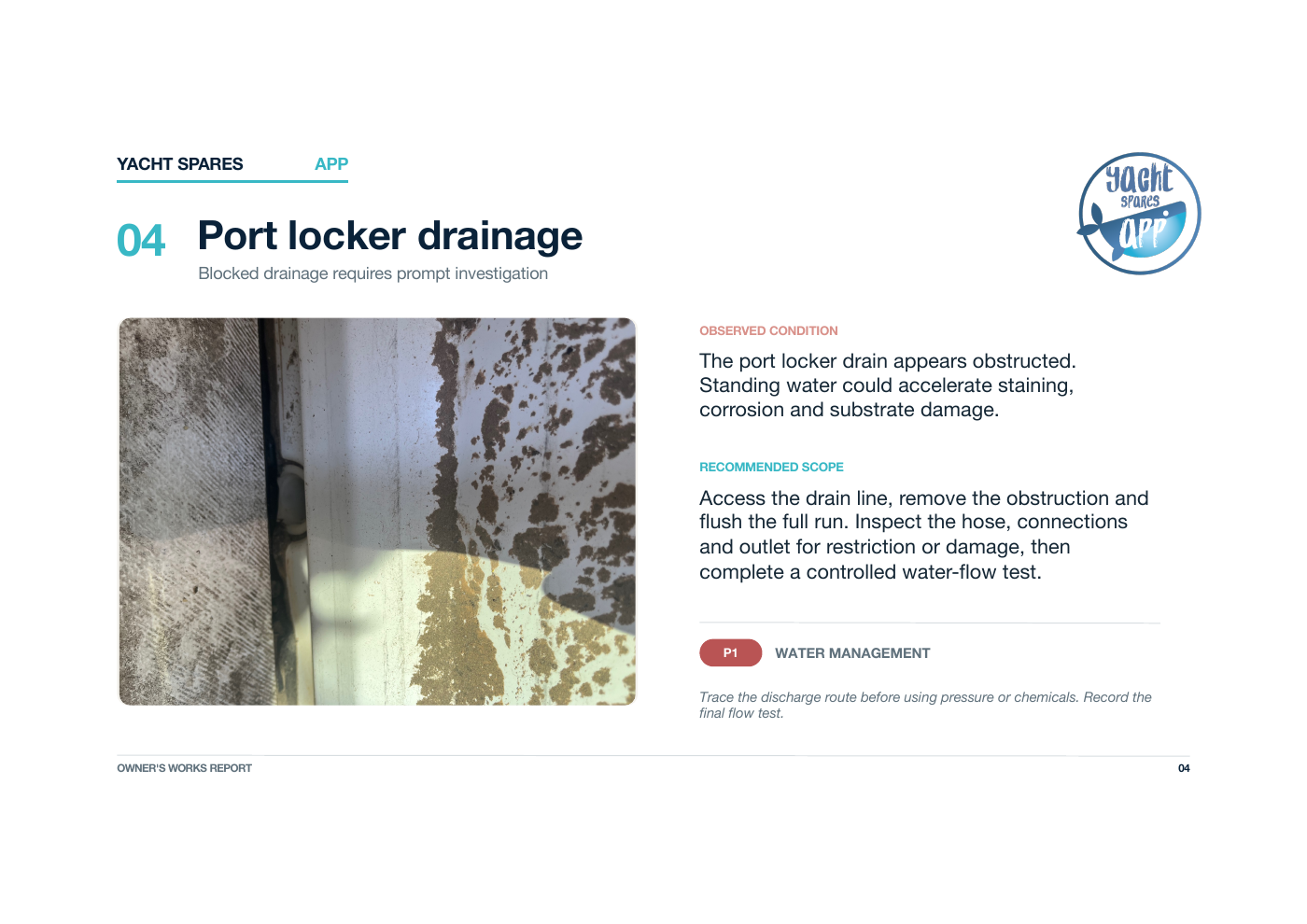
Example 1: a blocked locker drain
Water was not draining properly from a port-side locker. The visible mark alone does not define the repair. The drain route, hose, fittings and outlet must be checked to find the obstruction. After addressing the cause, a documented flow test should confirm the result.
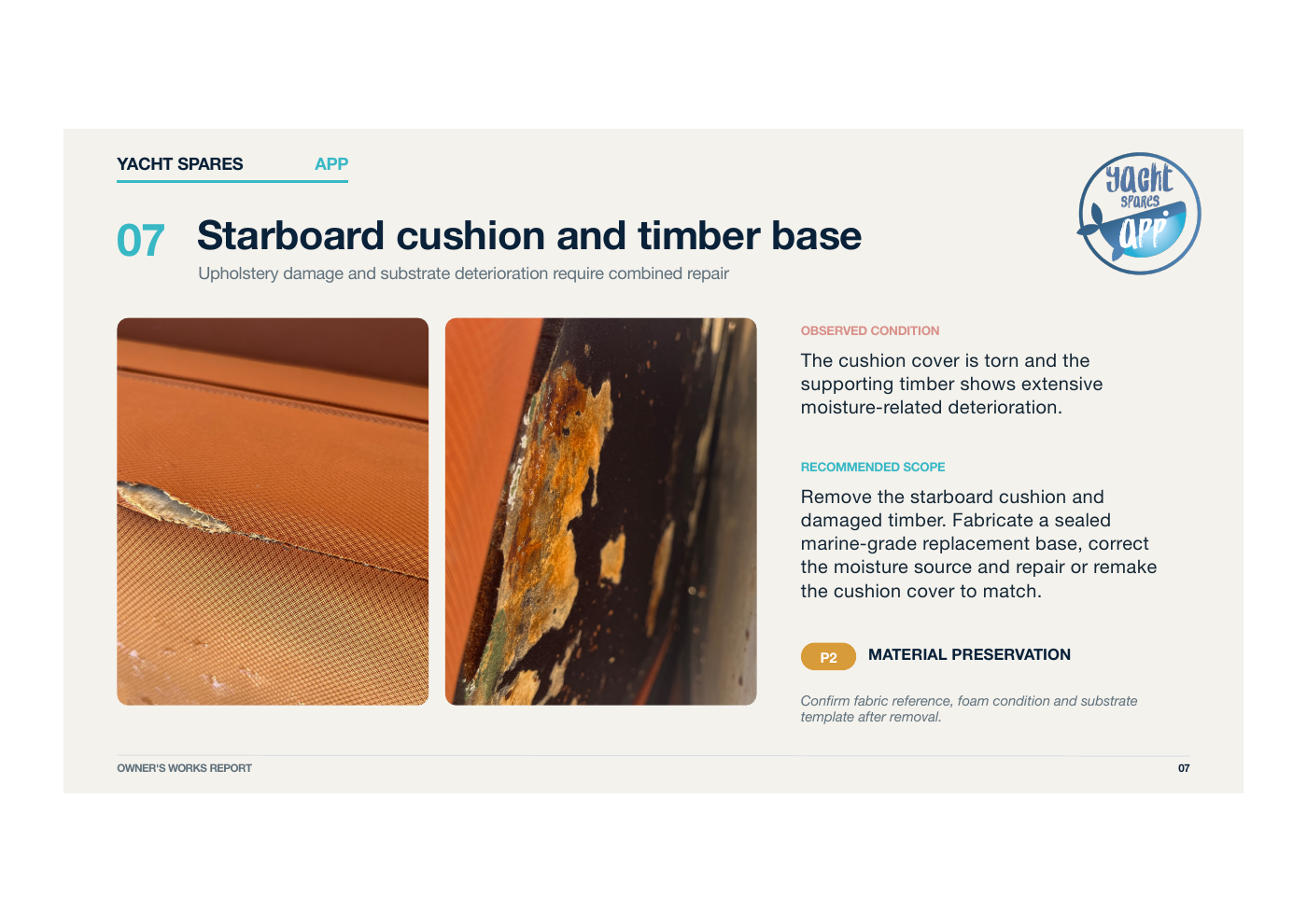
Example 2: repairing a seat and its support
A torn cover can conceal a deeper problem. Here, moisture had also damaged the wooden support. Replacing the upholstery alone could leave the cause untouched. The proposed scope includes finding the water ingress, removing the seat, making a protected marine-grade support and restoring the upholstery after approval of the material and colour.
From finding to acceptance
The report goes beyond photographs and proposes a sequence that reduces ordering mistakes and rework:
- Confirm: measure, identify models, check access and agree the owner’s choices.
- Source: identify compatible parts and prepare the work package.
- Execute: protect adjacent finishes, carry out the work and document what is found after dismantling.
- Accept: test each function, clean the area and provide closing photographs.
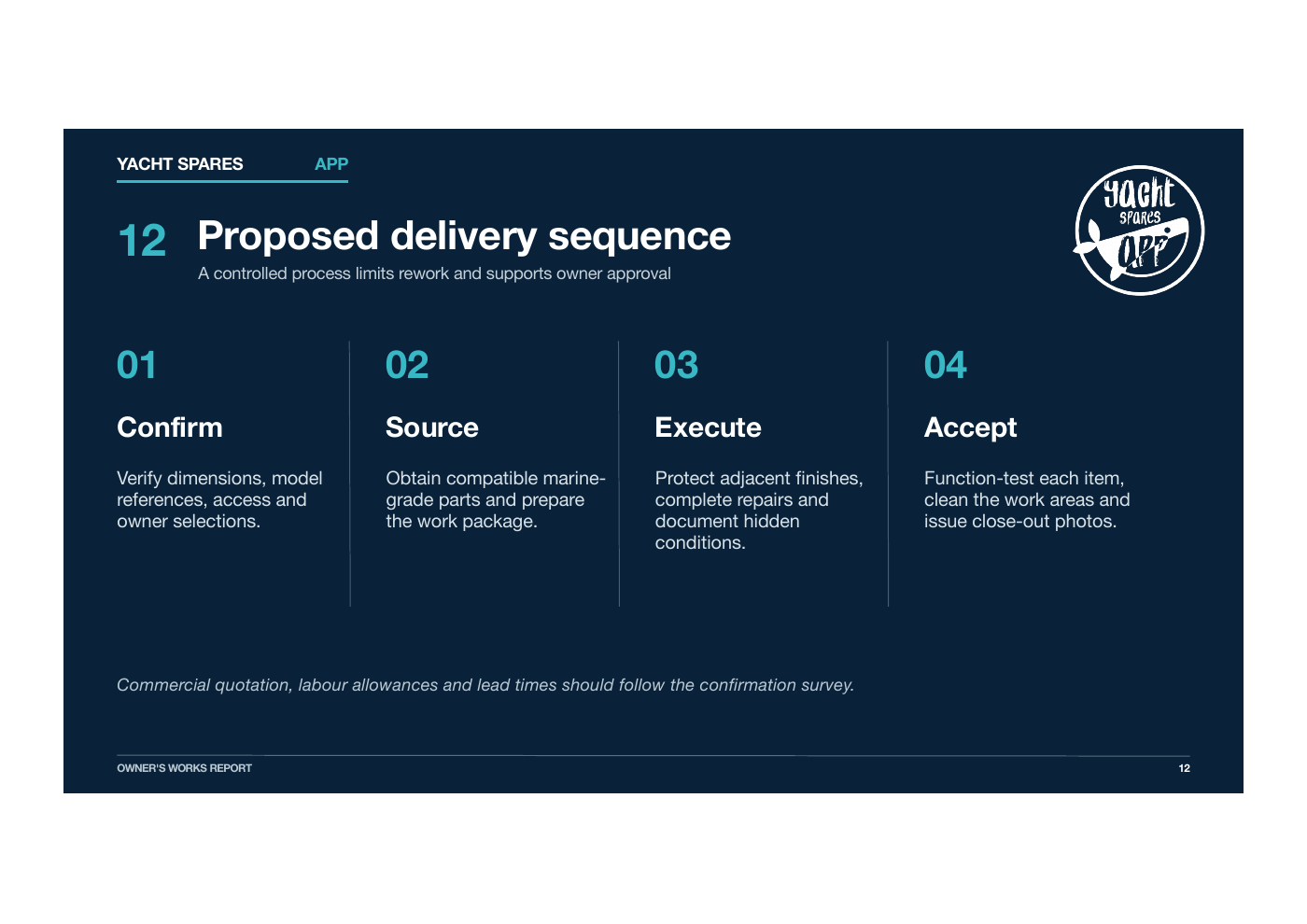
Final costs, lead times and work order should be set only after onboard checks and owner approval. This prevents a working assumption from being presented as a certainty.
What owners and management gain
A strong inspection report brings localised photographs, priorities, technical checks, repair scope and expected tests into one document. It supports clear exchanges between crew, management, suppliers and contractors, while recording decisions.
The same thinking informs Yacht Spares APP: connecting needs identified on board with the right references and a shared action trail.
Anonymised case study. Images are extracts from a visit report prepared by Yacht Spares APP. Recommendations reflect findings on the inspection date; this article is neither a complete diagnosis nor evidence that the work has been completed.